Why March and April May Be the Best Time to Visit Yosemite (Waterfalls, Firefall & Fewer Crowds)
Wondering when to visit Yosemite National Park? Discover why March and April may be the best time to visit Yosemite in spring, with roaring waterfalls, fewer crowds, and incredible photography conditions in Yosemite Valley.

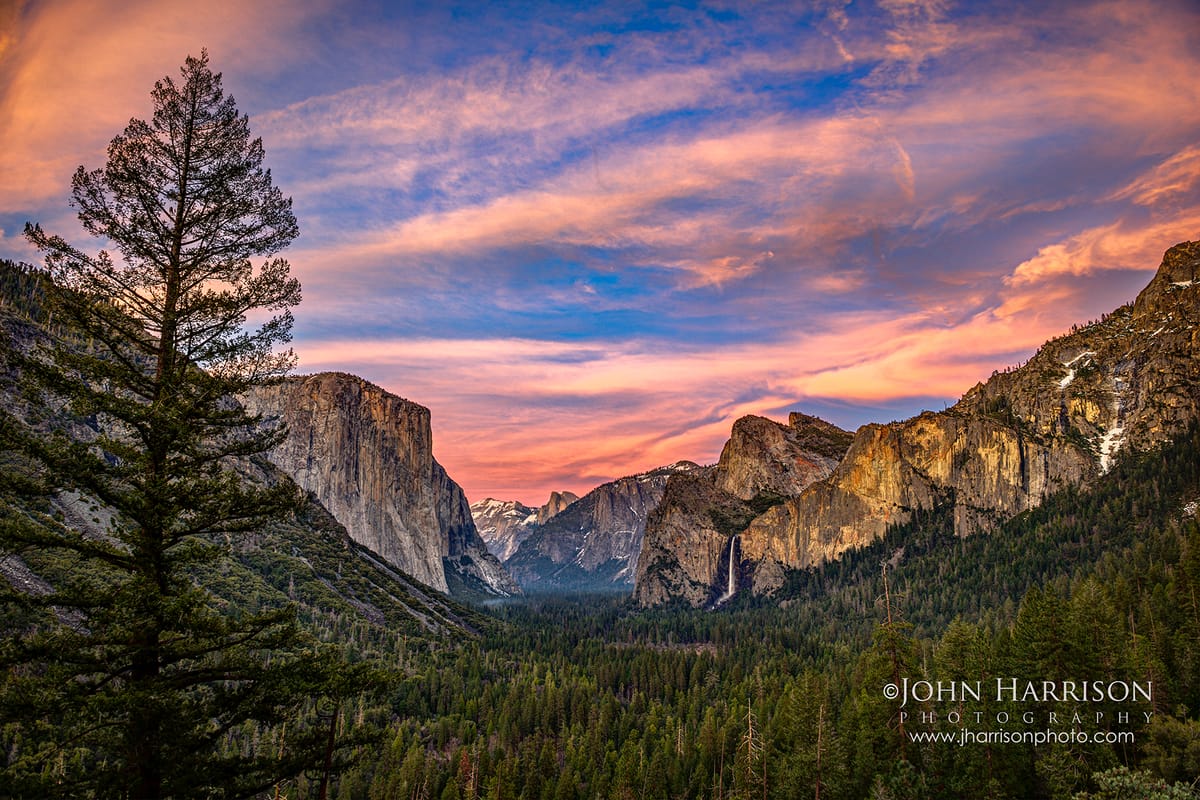
Spring may be the most underrated season in Yosemite National Park. Between March and April, waterfalls roar back to life and snow still dusts the granite peaks, yet Yosemite Valley remains surprisingly quiet before the summer crowds arrive.
TL;DR — Yosemite in Spring
• Best for waterfalls, fewer crowds, and changing light
• March and April are ideal for Yosemite Valley
• Firefall glow can linger beyond peak season
• Bring layers and always check road and chain conditions
• Two to three days is ideal for a first visit
I just returned from a mid-March trip, and it reminded me why this specific window is my favorite time to be in the park. If you've been looking for a way to experience the legendary waterfalls and 'Firefall' glow without the 2026 madness, here is exactly how to do it.
Most people imagine Yosemite as a crowded summer destination filled with packed parking lots, busy trails, and long shuttle lines. With recent headlines about Yosemite removing reservation requirements, summer will likely feel even crazier.
But spring transforms Yosemite into something entirely different!
During this past weekend, Yosemite Valley felt surprisingly peaceful. Waterfalls were beginning to roar back to life as snow melted in the Sierra Nevada. Clouds drifted through the valley creating dramatic light. And some of the park’s most famous viewpoints felt almost empty (shh – don't tell anyone!)
For photographers and nature lovers, it was incredible.
Spring in Yosemite offers powerful waterfalls, snow-dusted granite peaks, comfortable hiking temperatures, and far fewer crowds than the busy summer season.
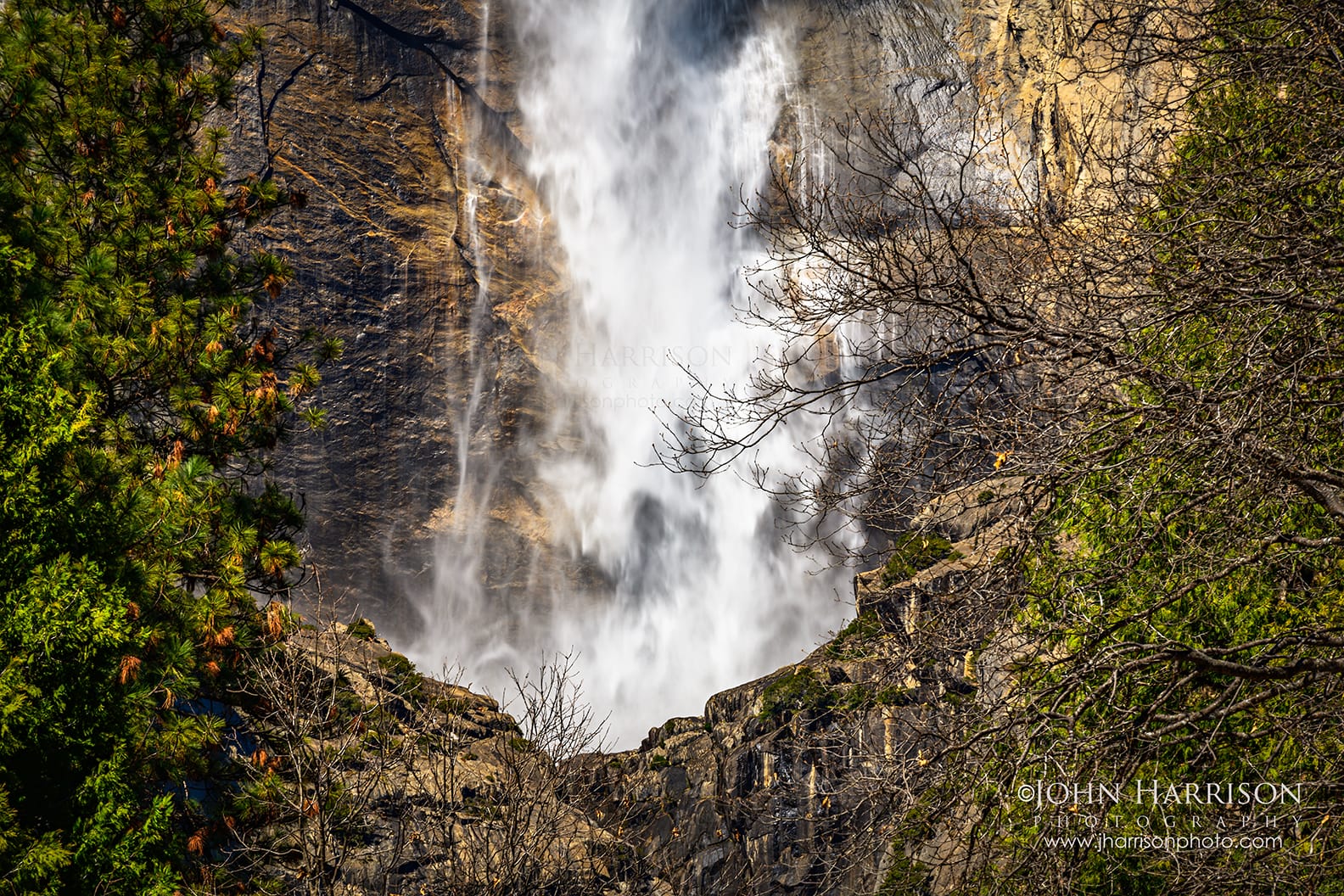
Yosemite for Spring Break
Many travelers consider visiting Yosemite for spring break, and it can be an incredible time to explore the park.
Higher elevations like Tioga Pass remain closed due to snow, but Yosemite Valley is fully accessible and bursting with life.
Waterfalls grow stronger each day as snowmelt begins. Storms roll through the valley bringing dramatic skies and constantly changing light. Trails in the valley become ideal for hiking while the surrounding peaks remain covered in snow.
Compared to the crowds of summer, spring break in Yosemite can feel surprisingly calm.
Entering Yosemite Through Arch Rock
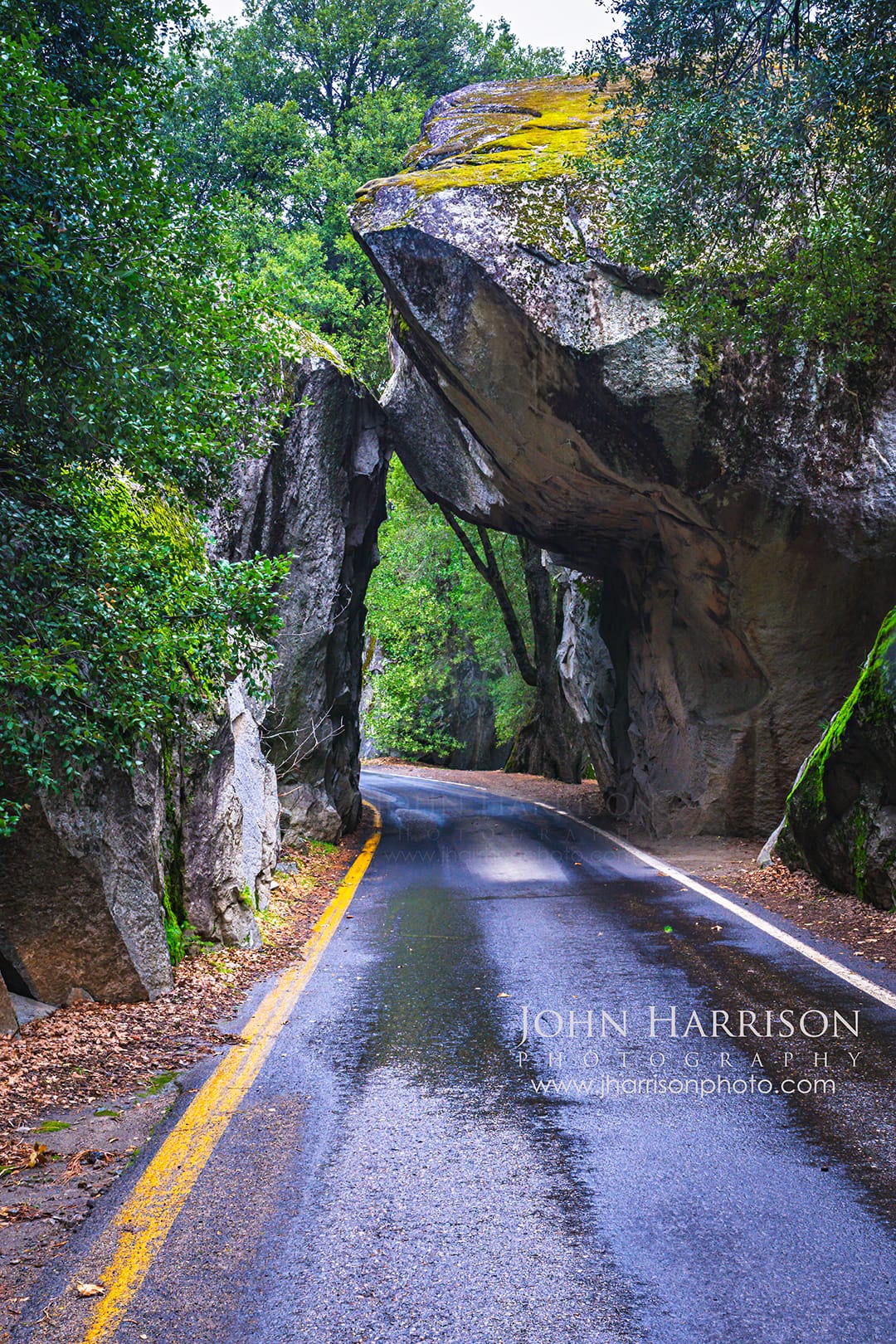
For me, the Yosemite Arch Rock Entrance along Highway 140 has always felt like the true gateway into Yosemite National Park.
After winding through the Merced River canyon and passing the ranger station, the road suddenly narrows beneath towering granite walls. Then, the path leads you directly under Arch Rock—a massive natural gateway formed by two colossal granite boulders that toppled against one another long ago to create a perfect stone tunnel.
Every time I drive through this spot I know I’m almost there. Yosemite Valley is just a few miles ahead, and the excitement of entering one of the most spectacular landscapes in the world starts to build.
On this particular spring morning the road was completely empty after a light rain, so I stopped for a quick photograph. Moments like this—quiet, peaceful, and surrounded by ancient granite—are the kind of Yosemite memories that stay with you long after the trip ends.
A Yosemite Valley That Feels Empty
One of the most surprising things about Yosemite in spring is how quiet the Valley can feel.
I had one of my close photography friends join me for this trip; it’s always a better adventure when you have someone to help scout the light and share the long miles between shots.
One morning, we walked from Curry Village toward Happy Isles just to get our steps in before the light hit the granite.
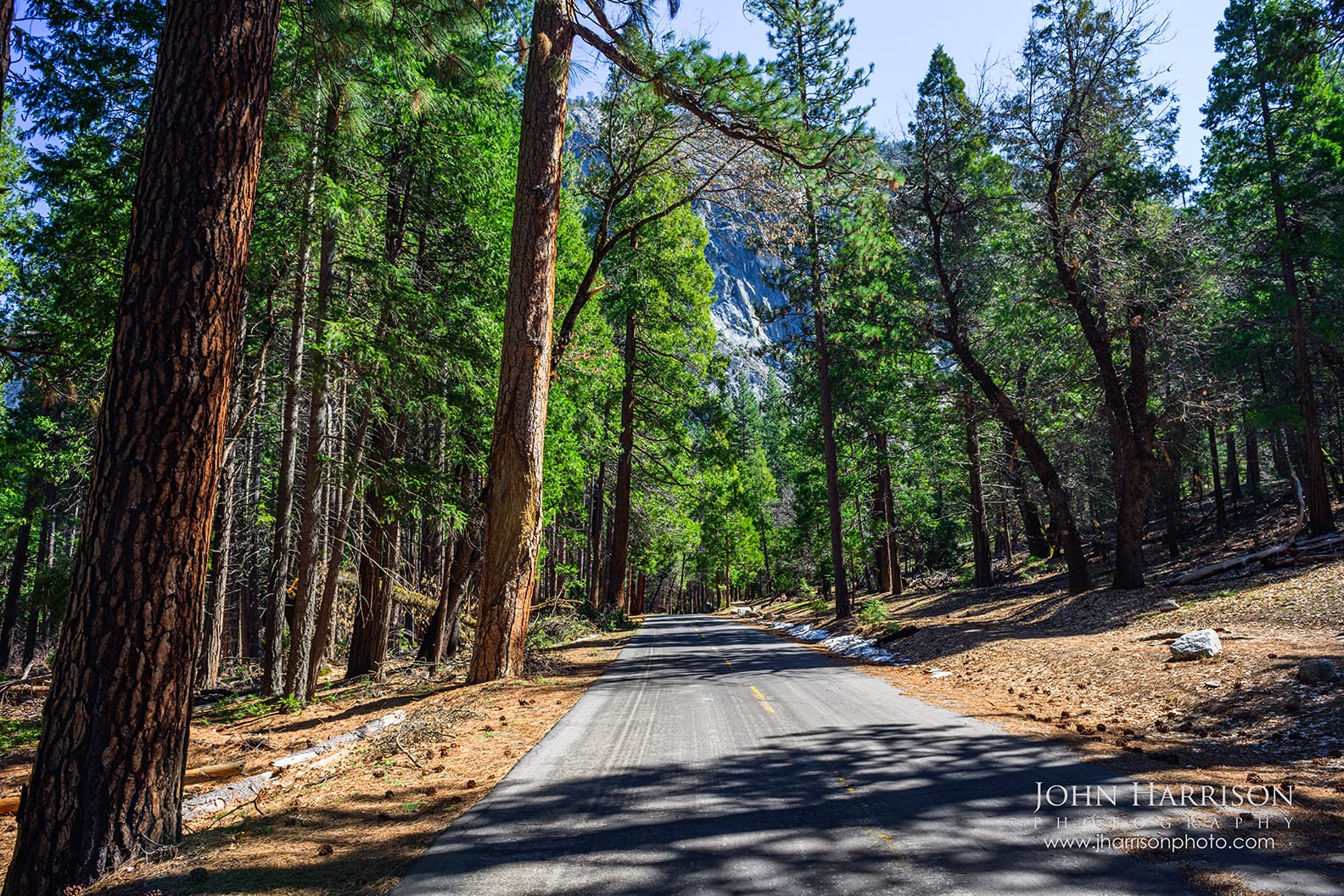
To my surprise, we were the only people on the road.
No crowds.
No lines of hikers heading toward the trailheads.
Just the sound of the Merced River and distant waterfalls echoing off Yosemite’s granite cliffs.
As we passed the Mirror Lake and Happy Isles bus stops, there were a few more visitors around.
In all my years visiting Yosemite, I had never experienced the valley that quiet.
For photographers, moments like that are priceless.
Yosemite Waterfalls in Spring
Waterfalls Roaring Back to Life
Spring marks the beginning of Yosemite’s waterfall season.
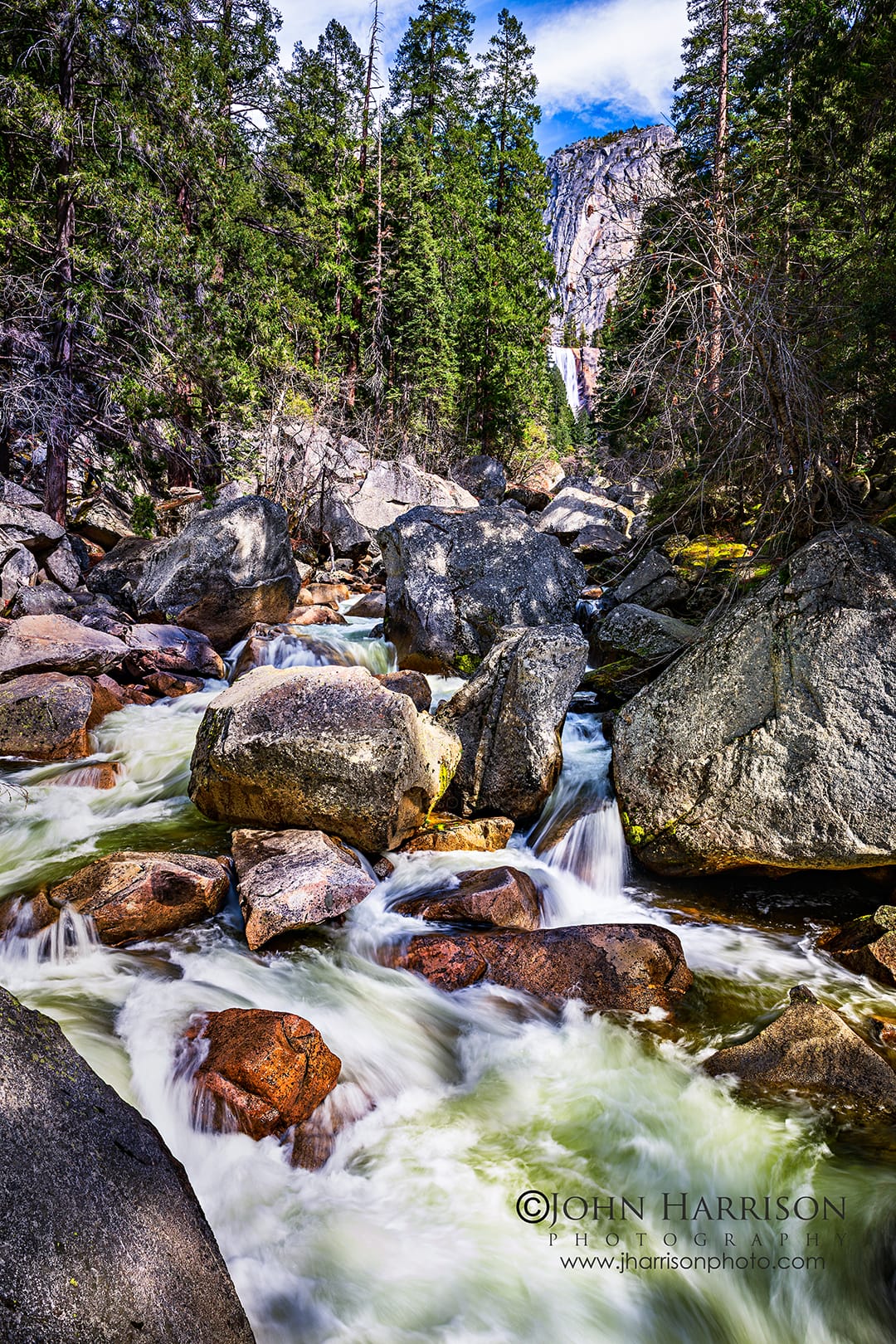
As snow begins melting throughout the Sierra Nevada, waterfalls quickly grow stronger.
Hiking toward Vernal Fall along the Mist Trail during spring runoff is unforgettable. Water crashes down the granite cliffs while mist fills the air and rainbows appear in the sunlight.
The Vernal Fall Bridge is a must-do stop. This is one of the classic Yosemite hikes you should have on your list, but remember, it is about a mile and is a moderate 400 foot elevation gain and takes about an hour or two round trip. It is the initial, shaded portion of the popular Mist Trail, offering stunning views of the Merced River and a great viewpoint of the 317-foot waterfall.
The weather this past weekend was surprisingly warm! I started in a sweatshirt and was down to a shirt only while my friend was down to a t-shirt.
Normally, daytime temperatures range between 50 and 70 degrees, making hiking comfortable enough for T-shirts and shorts during the day, although evenings were still cold.
Spring in Yosemite creates the perfect contrast — snowy peaks above while the valley floor warms into hiking season.
Follow the Yosemite Journey
I regularly share Yosemite field notes, seasonal photography conditions, and new fine art releases from the Sierra Nevada.
Yosemite Firefall Without the Madness
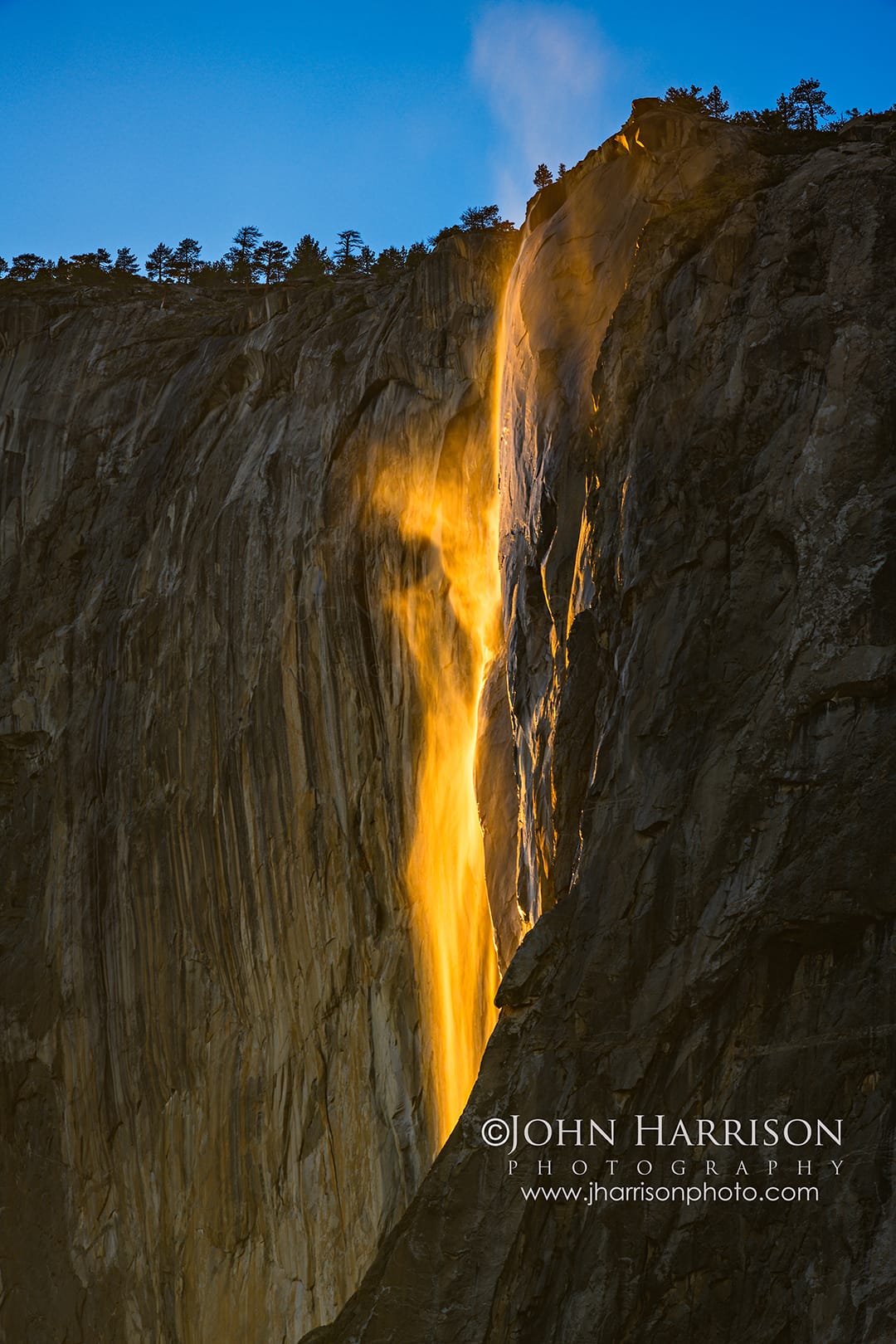
The Yosemite Firefall (Horsetail Fall) has become famous for the glowing waterfall that appears on Horsetail Fall each February. Hopefully you read my blog post "Yosemite Firefall (Horsetail Falls): What to Know Before Visiting in 2026" or better yet, "Planning Yosemite Firefall 2026? Why You Should Head Up to Badger Pass Instead"
But something interesting happens just after the peak Firefall season.
During this visit, the waterfall was still glowing!
The color wasn’t the intense fiery red seen during peak Firefall nights — more of a soft orange glow.
But the biggest surprise?
There were only eight people nearby.
We parked close, walked a short distance, and watched the glow appear on the face of El Capitan without the massive crowds that normally gather for Firefall.
For a moment, Yosemite felt calm again. I was definitely in my happy place!
A Sunset Gamble at Tunnel View
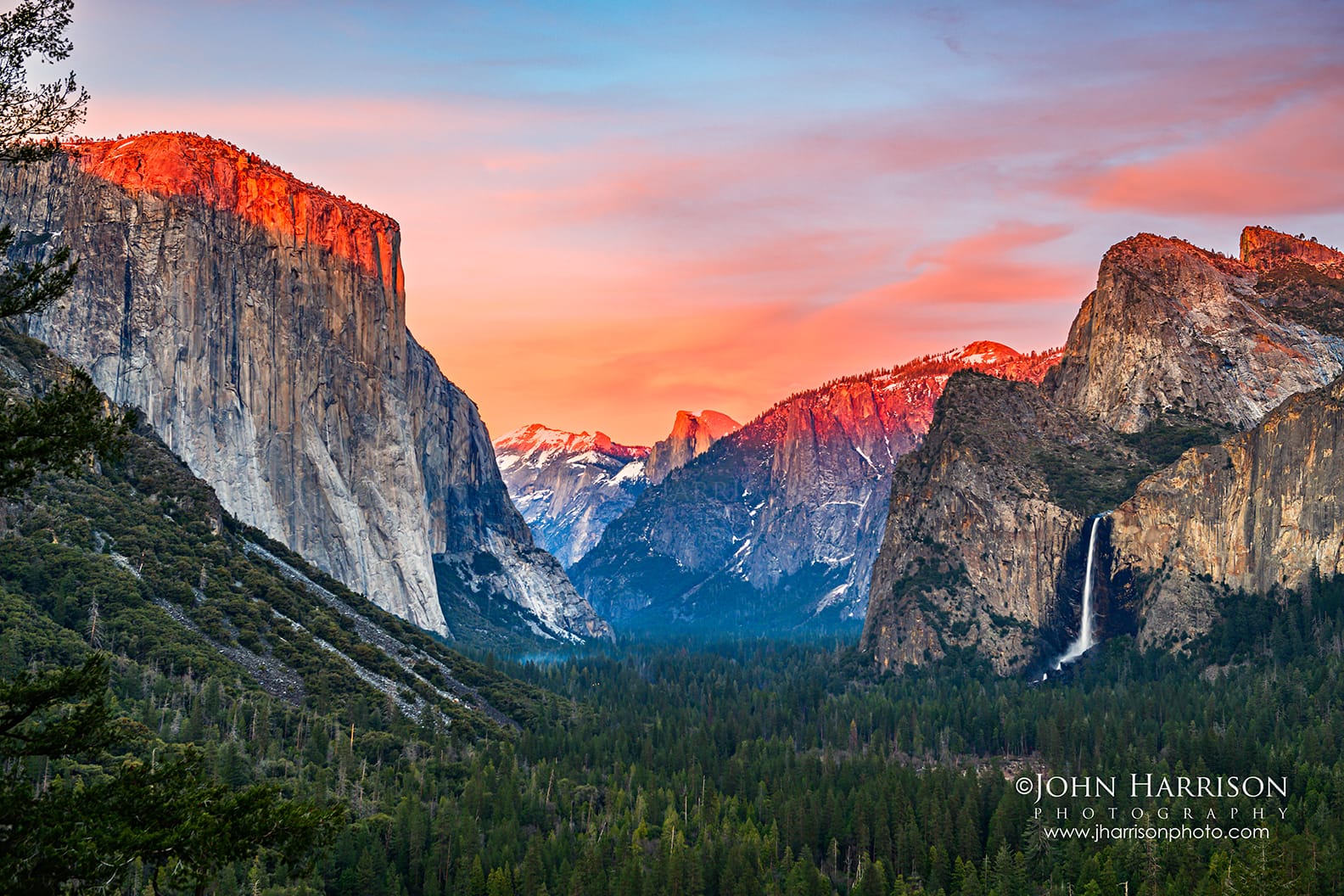
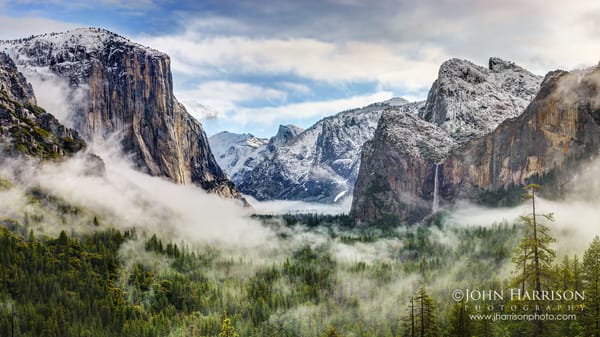
Tunnel View is one of the most iconic viewpoints in Yosemite National Park.
On this particular day and evening the sky looked completely overcast.
Many photographers might have skipped sunset entirely.
But my unofficial weather forecast team insisted we go anyway.
I was skeptical, but we drove up to Tunnel View just before sunset as we were just down the road at Fern Spring.
They were right.
The skies and clouds suddenly began to break apart and light poured across Yosemite Valley, illuminating El Capitan, Bridalveil Fall, and Half Dome.
It turned into one of the most dramatic Yosemite sunsets I’ve ever witnessed.
Even with around fifty people standing nearby, the energy at that viewpoint was incredible.
It’s always fascinating to stand at a place like Tunnel View with other photographers. Even though we were looking at the same granite walls, it was interesting to see everyone’s different interpretations of the light.
My friend's shot from the same sunset was totally different from mine—reminding me that photography isn't just about the location, but how each artist chooses to translate that moment.
Fern Spring — Yosemite’s Smallest Waterfall
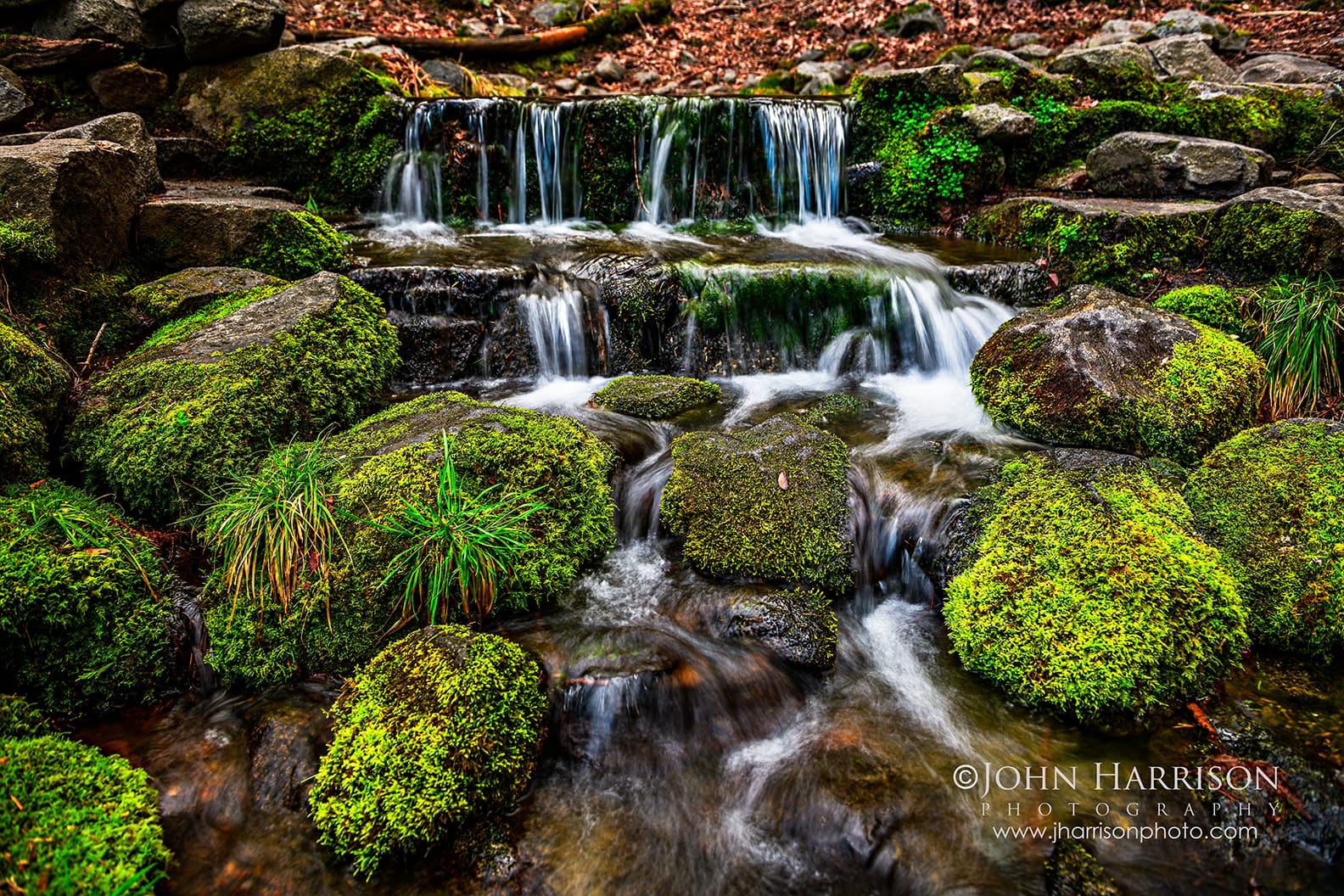
While Yosemite is famous for massive waterfalls like Yosemite Falls and Vernal Fall, some of the park’s most beautiful scenes are much smaller.
Fern Spring is often described as Yosemite’s smallest waterfall, but it’s also one of the most beautiful hidden corners of Yosemite Valley.
Water flows gently through moss-covered rocks creating a quiet little cascade.
Many visitors drive right past it without noticing.
During our visit only one couple stopped briefly to fill a water bottle.
Otherwise the area was completely empty.
For photographers, places like Fern Spring offer wonderful textures and intimate landscape compositions.
A Hidden World of Moss, Slime Mold & Rock Textures
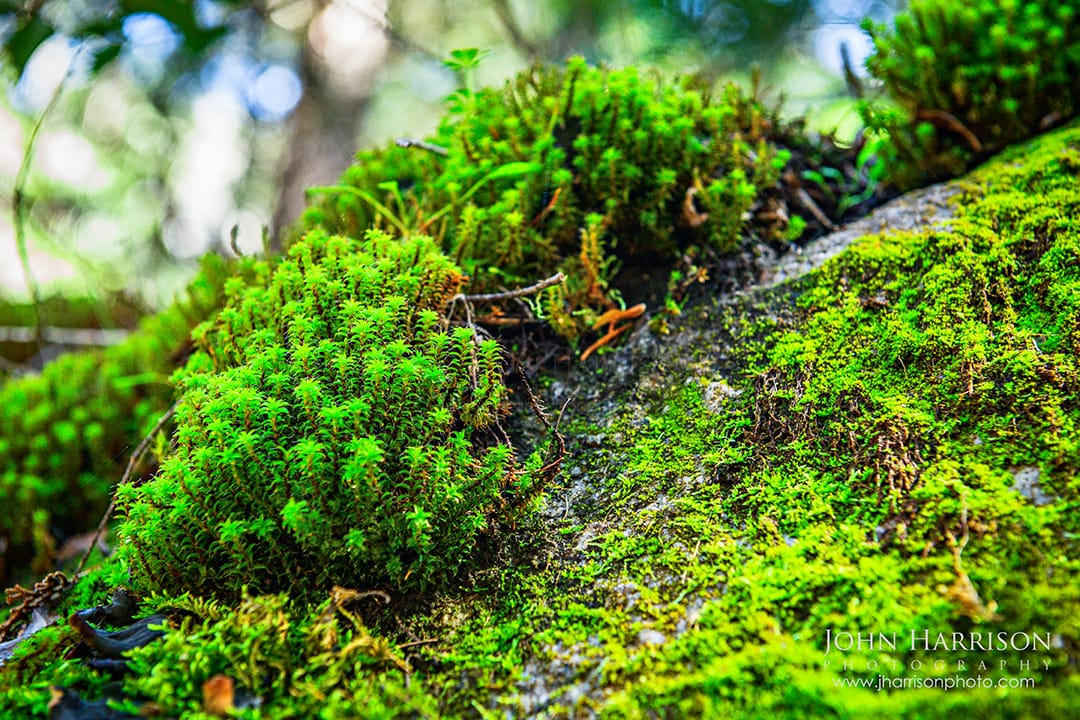
While Yosemite’s towering granite cliffs grab most of the attention, some of the most fascinating photography happens much closer to the ground.
Spring moisture creates ideal conditions for moss, lichen, and even slime mold to grow across granite rocks and fallen logs.
Small sections of forest floor become beautiful abstract landscapes filled with color, pattern, and texture.
Photographing these tiny ecosystems reveals a completely different side of Yosemite — one that many visitors walk right past.
Sentinel Rock at Blue Hour
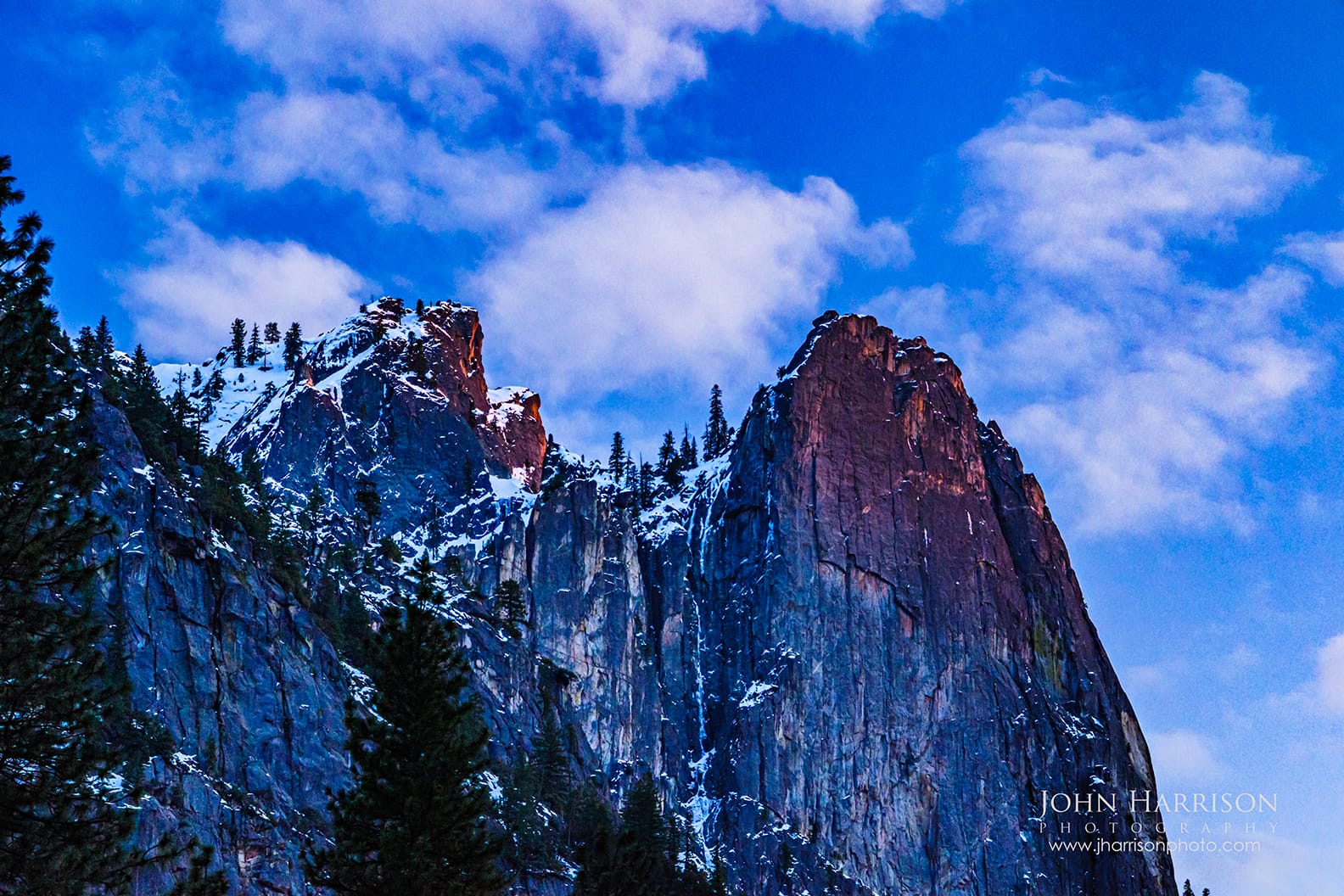
As the sun sets behind Yosemite Valley, the granite walls surrounding the valley often glow with alpenglow—a soft red or purple light reflecting from the atmosphere after sunset. Sentinel Rock is one of the best places to witness this subtle phenomenon.
In spring, lingering snow along the upper cliffs adds beautiful contrast to the warm tones of the fading light. As the sky transitions into blue hour, the colors deepen and clouds drifting across the valley create dramatic texture across the granite walls.
Yosemite Village & The Legacy of Landscape Photography
Another stop every photographer should make is Yosemite Village.
The Yosemite Valley Visitor Center offers fascinating exhibits about the geology, wildlife, and natural history of the park.
Just steps away is the famous Ansel Adams Gallery.
The gallery continues the legacy of legendary landscape photographer Ansel Adams and showcases work from contemporary masters including Charlie Cramer and Michael Frye.
Photography workshops and guided photo walks are also offered, making it a wonderful place to connect with Yosemite’s long tradition of landscape photography.
Explore More Yosemite Stories & Photography
Discover travel guides, photography locations, and fine art landscape images from Yosemite National Park.
Where to Stay Inside Yosemite Valley
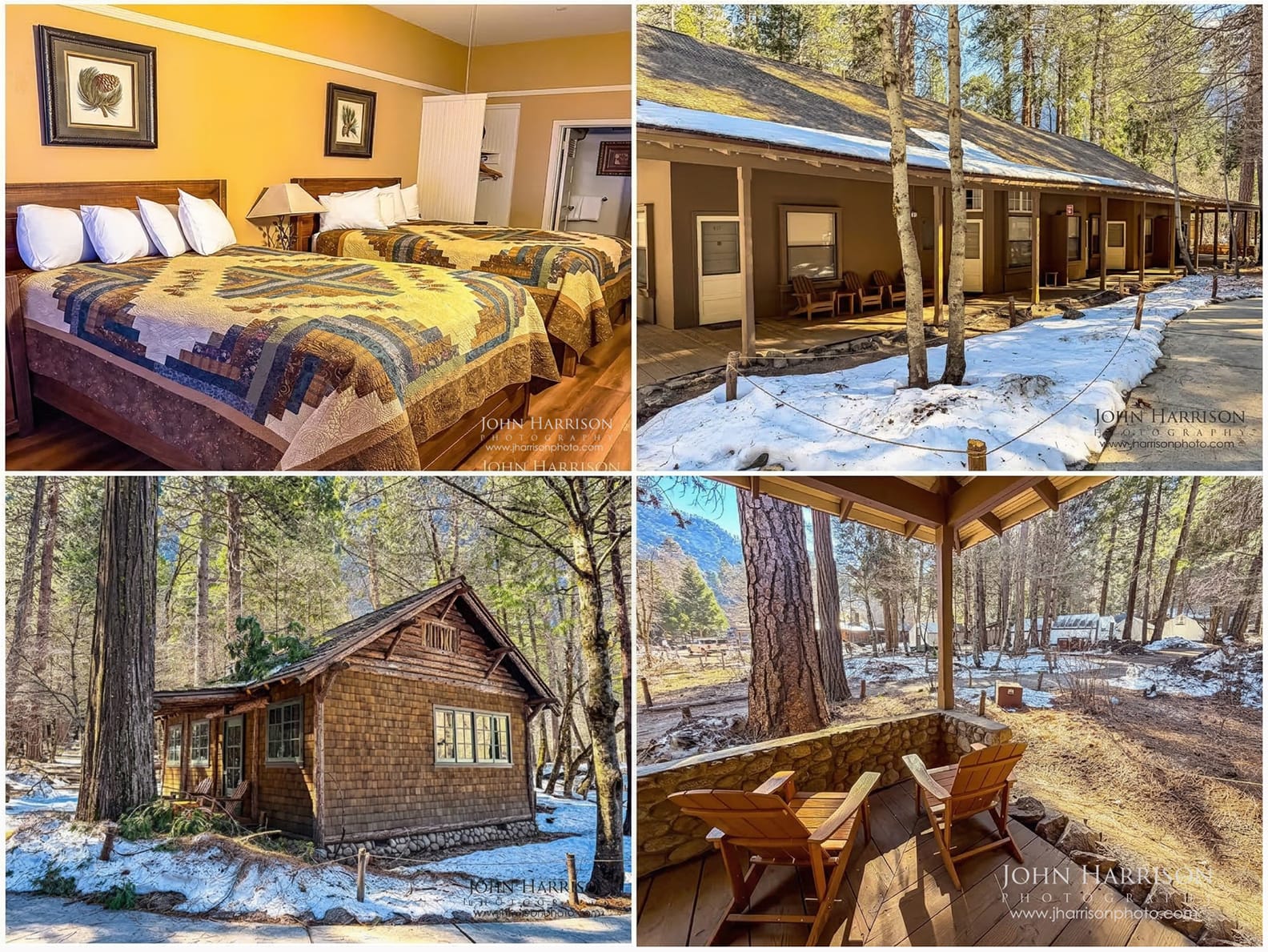
One surprise during this spring visit was how many lodging options were available inside the park.
For the first time I stayed at the Stoneman.
These standalone cabins sit tucked into the forest just behind the Curry Village registration area. The cabins include heat, showers, and easy food and parking access.
I had never been able to reserve one before — they usually book quickly.
But during this visit several were available.
While not inexpensive at around $230 per night, staying inside Yosemite Valley makes sunrise and sunset photography dramatically easier.
Other lodging options inside the park include:
• The Ahwahnee - bring your $$$. Beautiful place for anniversaries and special occasions. (see pictures below)
• Yosemite Valley Lodge - This is our family lodging favorite we normally stay at.
• Curry Village tents and cabins – Choose between heated canvas tent cabins or rustic cabins with shared bath facilities.
Food, Coffee & Easy Dining
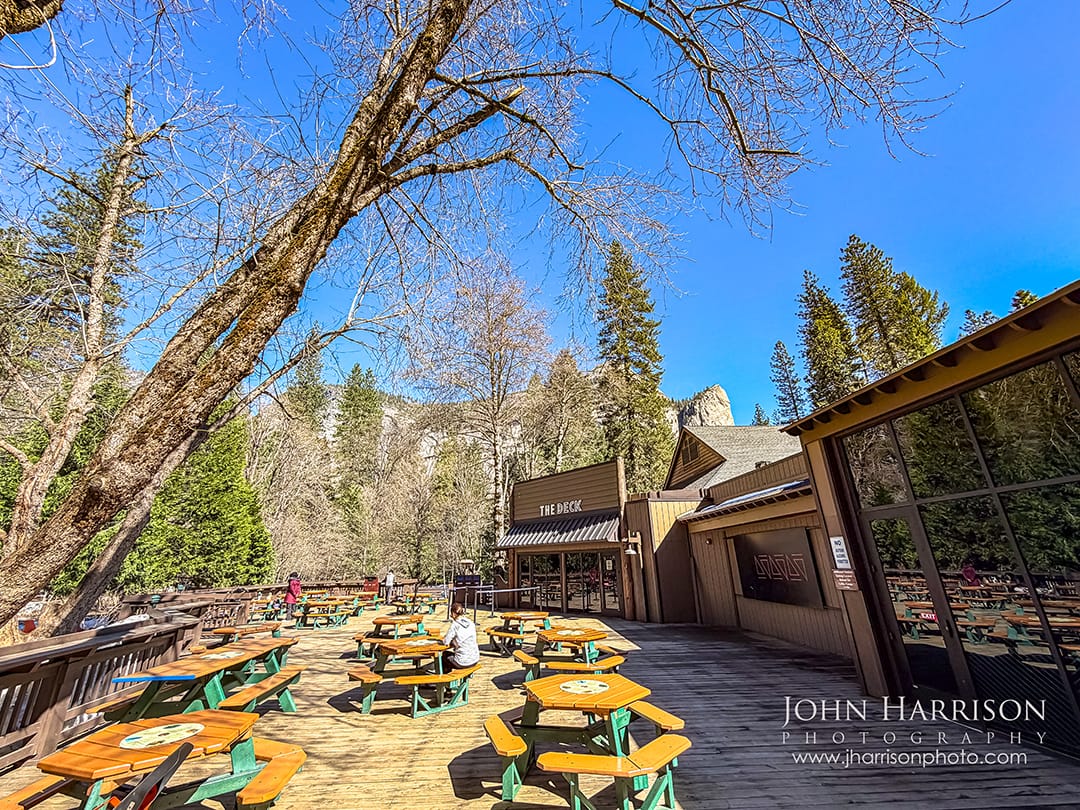
Spring also makes dining inside Yosemite Valley far easier than during peak summer months.
Curry Village includes a grocery store, gift shop, cafeteria, and pizza deck.
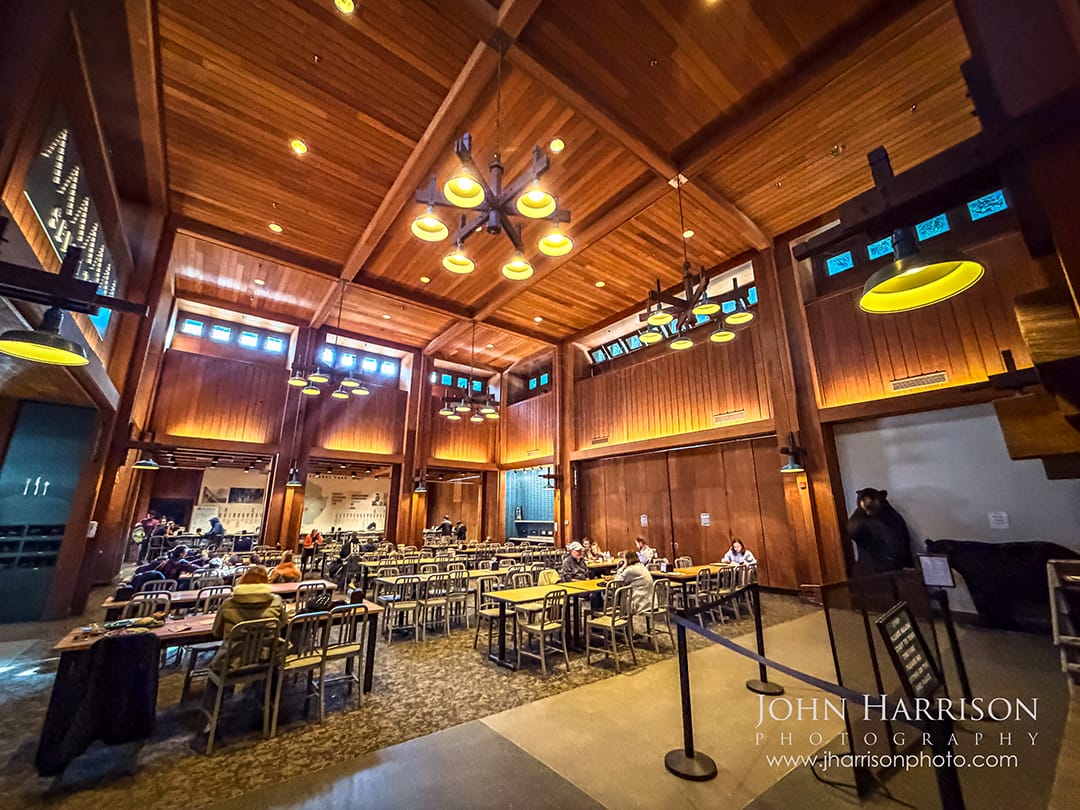
One of the funniest moments of the trip happened at Peet’s Coffee.
I walked in expecting a long line.
There was no one ahead of me.
After photographing waterfalls all morning, that latte tasted fantastic.
Dinner at Yosemite Valley Lodge was also easy to get both nights.
Visit The Ahwahnee Hotel in Yosemite National Park
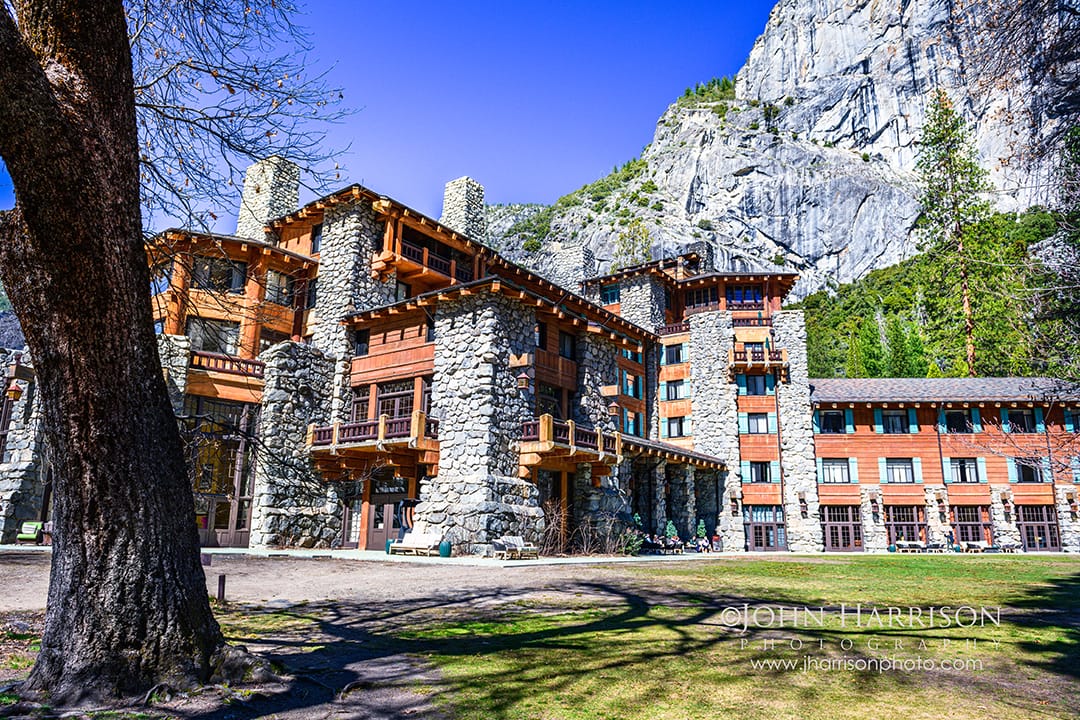
No Yosemite visit feels complete without stepping inside the historic Ahwahnee Hotel.
Massive stone fireplaces, towering ceilings, and huge windows framing Yosemite’s granite cliffs make it one of the most beautiful lodges in the national park system.
Even if you are not staying there, it’s worth visiting.
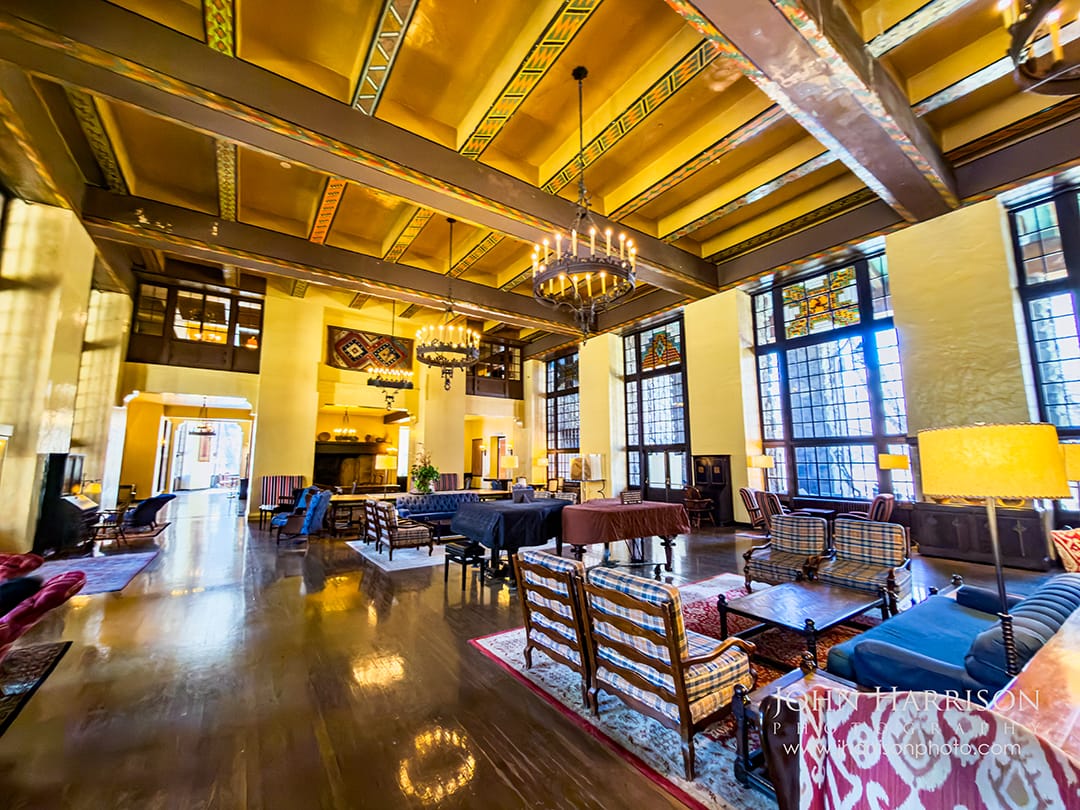
Relax on the patio with coffee or a drink, explore the gift shop, or simply sit in the great hall and enjoy the incredible architecture.
Dinner here can feel like stepping back into Yosemite’s golden era of exploration.
Today, visiting The Ahwahnee Hotel is considered one of the most memorable indoor experiences in all of Yosemite. Having just returned from a stay in Yosemite this March, it remains one of my personal favorite locations to photograph—especially when the spring light hits those massive stone fireplaces.
Secret tip — If you are booking a room here at the hotel, drop me an email for my personal tip on which rooms to request!
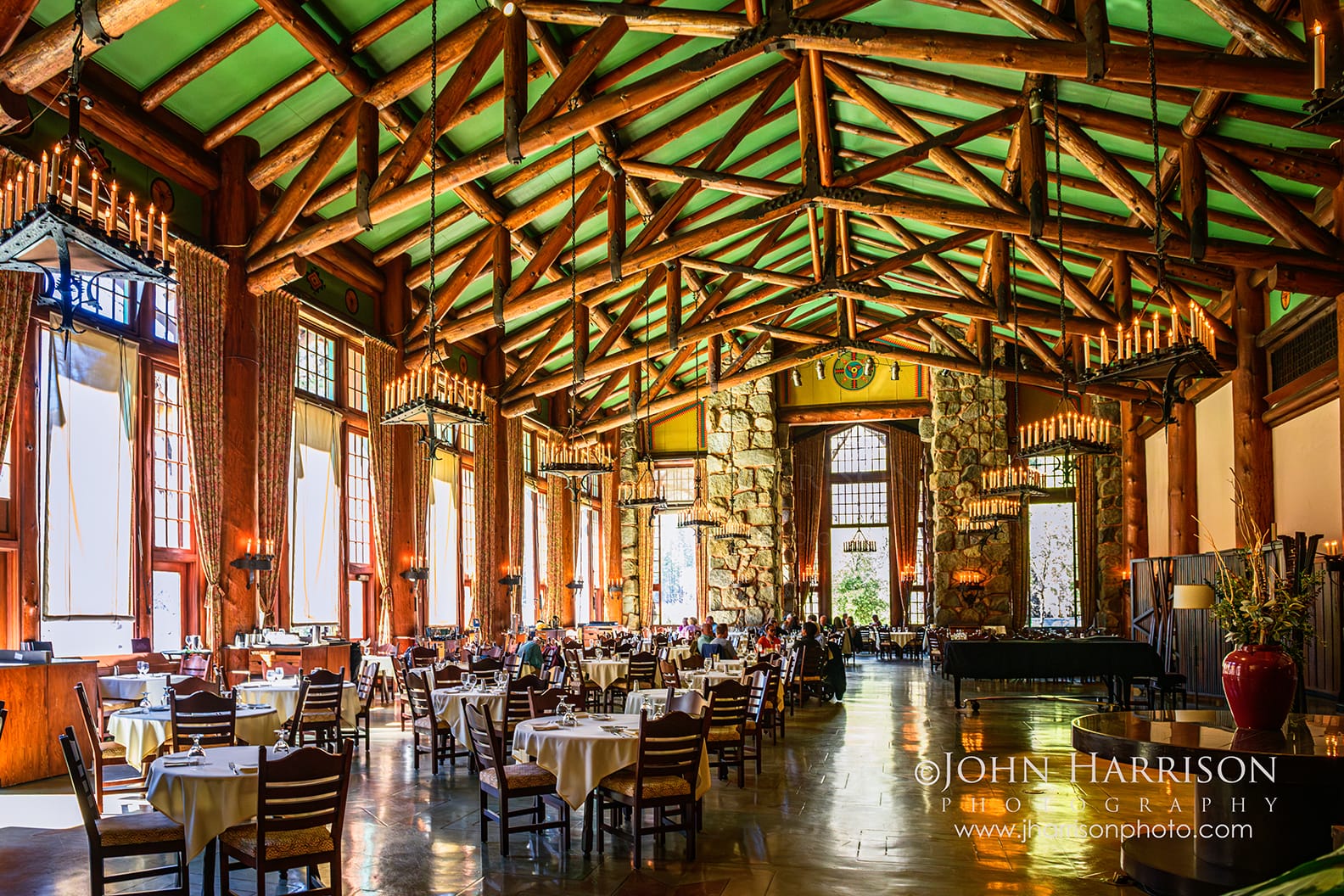
Ranger Programs, Wildlife & Spring Tips
Spring also brings excellent ranger programs throughout Yosemite.
One evening program during our visit focused on bats and was a big hit with families.
A few helpful spring travel tips:
Bears do not fully hibernate, so never leave food in your car.
Many campgrounds remain closed early in the season, although Camp 4 is often open and fills quickly.
Cell service throughout Yosemite Valley can be limited, so plan meeting locations ahead of time.
And perhaps the most important tip of all:
Slow down.
Yosemite is not a place to rush through.
Why Spring May Be Yosemite’s Best Season
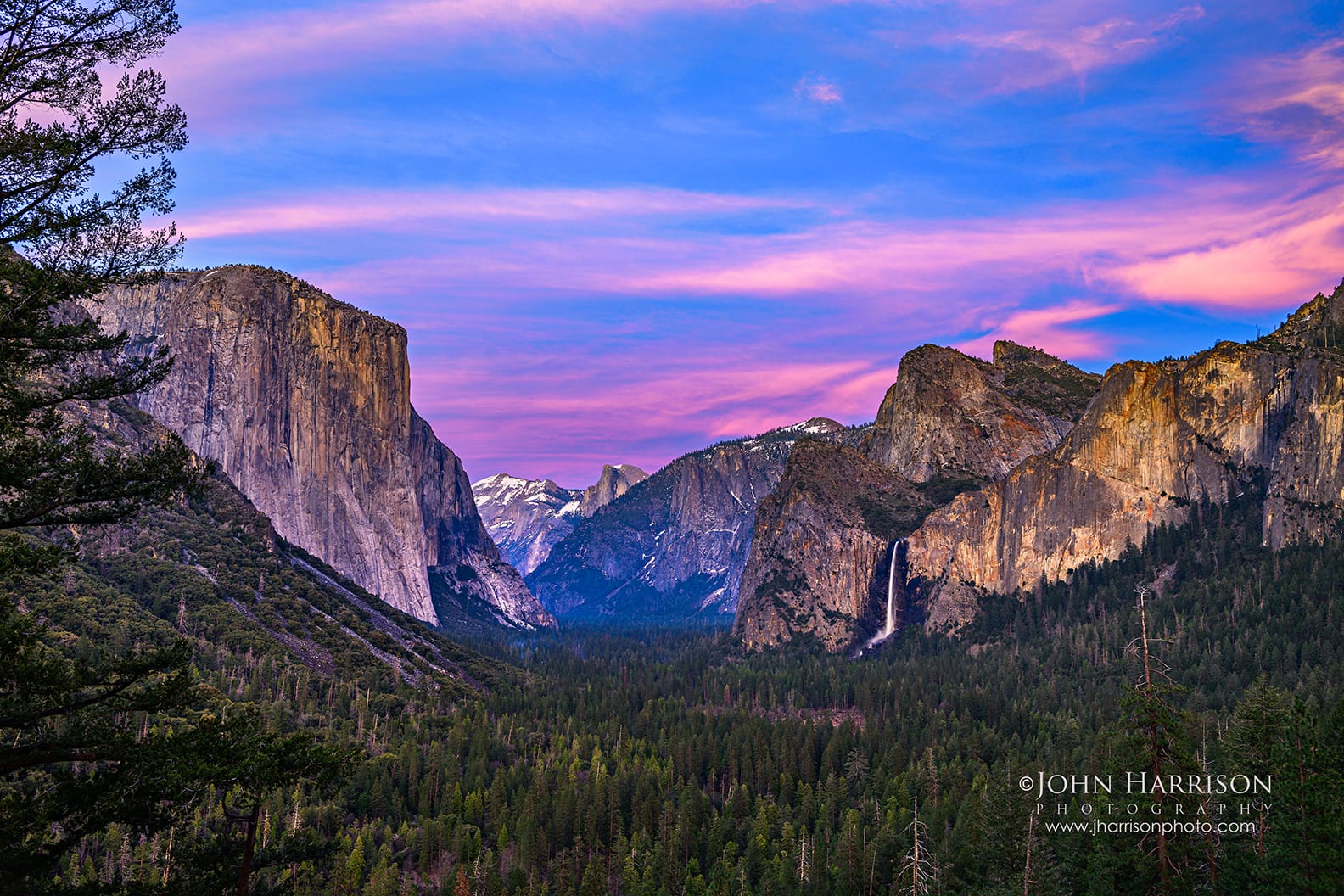
Spring offers a rare combination in Yosemite.
Powerful waterfalls.
Snow-covered peaks.
Comfortable hiking temperatures.
Dramatic skies and changing light.
And for brief moments, Yosemite Valley becomes quiet again.
Walking through the valley this past weekend reminded me why photographers return here year after year.
If you want to experience Yosemite with fewer crowds and some of the most dramatic photography conditions of the year, spring might just be the perfect time to visit.
Explore more images of places to visit in Yosemite Valley in my Yosemite Valley Travel Guide.
California Poppies Along Highway 140
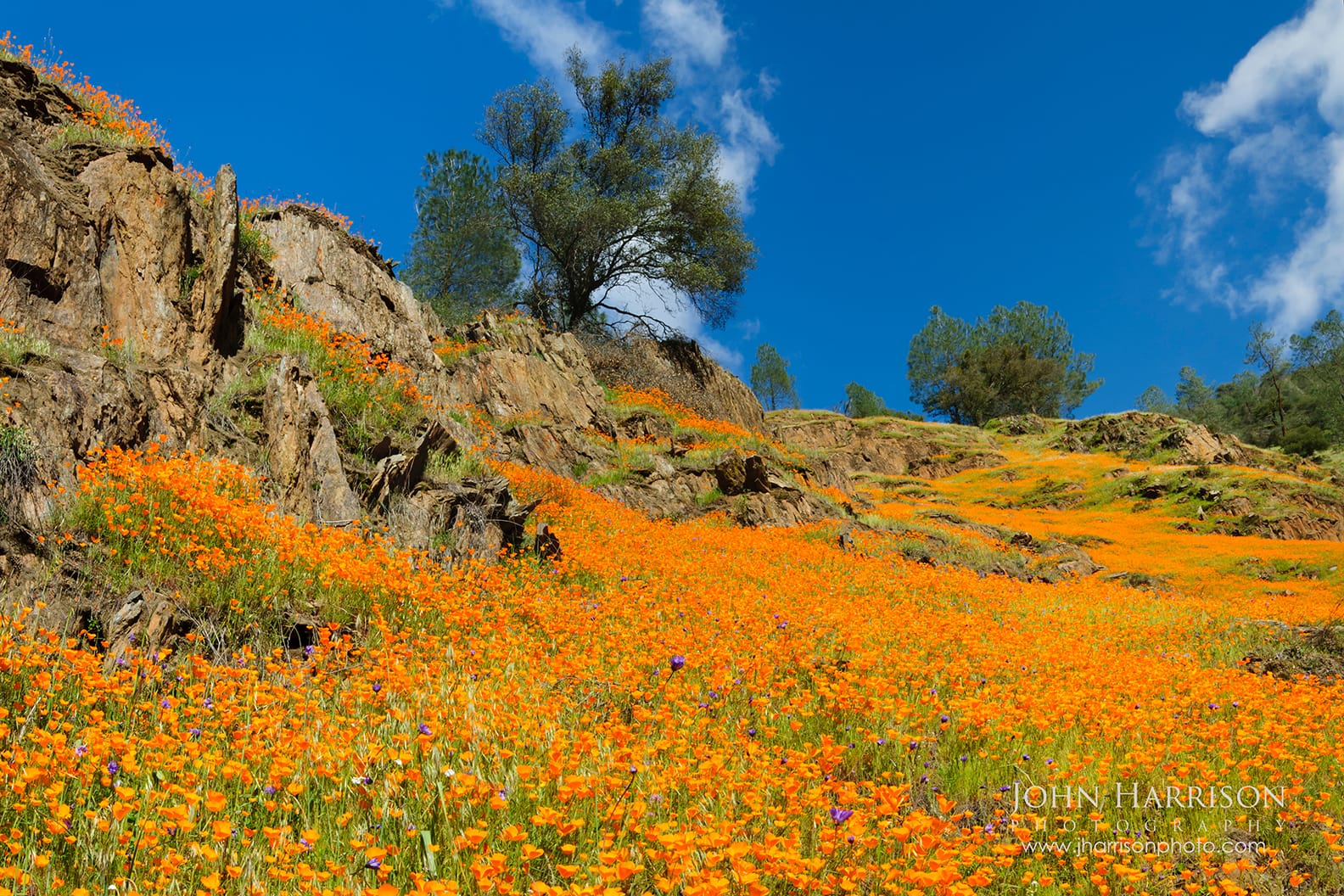
Spring visitors entering Yosemite from the west along Highway 140 sometimes get an unexpected bonus before even reaching the park — wildflower-covered hillsides along the Merced River canyon. In particularly good years, California poppies can blanket entire slopes in brilliant orange, creating what looks like an endless floral carpet climbing the rocky hillsides.
These blooms are unpredictable. Some years the hills remain green, while in exceptional seasons the flowers spread from the canyon floor to the ridges above. Locals often say these large poppy displays only appear every decade or two when rainfall and temperatures align perfectly.
If you’re driving toward Yosemite Valley in spring, it’s worth slowing down along sections of Highway 140 near El Portal to watch for patches of wildflowers along the hillsides.
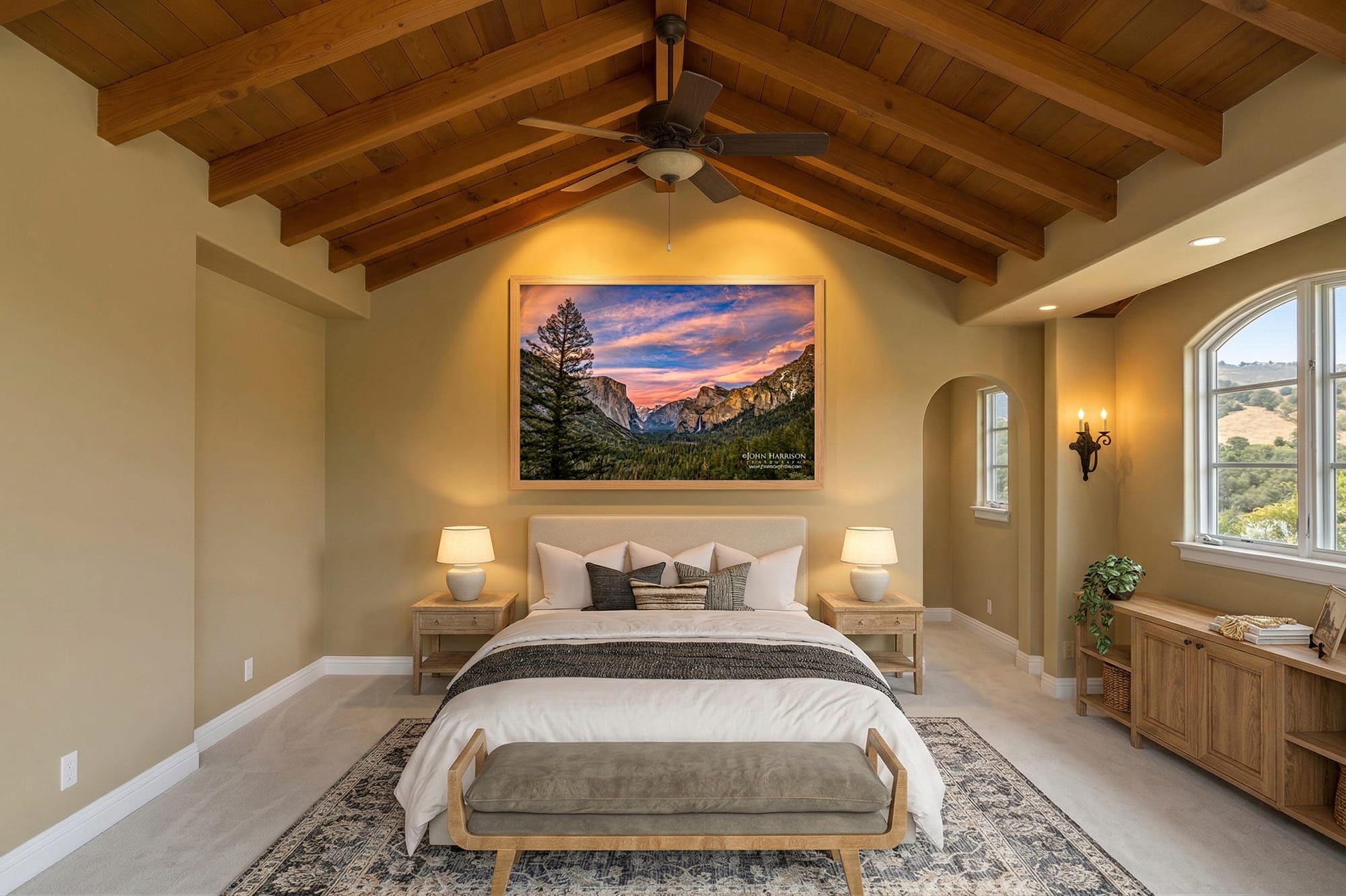
Collecting Yosemite Fine Art — Bringing the Landscape Home
Explore museum-quality fine art photography of Yosemite National Park — from towering granite cliffs to the quiet textures of the forest floor.
Check Yosemite Conditions with Live Webcams
One question I’m asked constantly is:
“How do I know if there is snow in Yosemite Valley right now?”
One of the best tools is Yosemite’s live webcams.
Before heading into the park each day, I checked the Yosemite webcams to see if clouds were building or if snow remained on the valley floor.
The Yosemite Conservancy operates several webcams including a popular view facing El Capitan and Yosemite Valley.
You can see the current view here:
https://yosemite.org/webcams/el-capitan/
These webcams make it easy to check snow levels, weather conditions, and waterfall visibility before heading out to photograph the valley.
Photography & Hiking Gear for Yosemite in Spring
Spring weather in Yosemite can change quickly, so layers are important.
For photography and hiking I typically bring:
• Waterproof jacket - personally I use an Arc'teryx Beta AR Gore-Tex Jacket
• Hiking boots with good traction
• Warm mid-layers
• Lightweight gloves for cool mornings
• Extra camera batteries for cold conditions
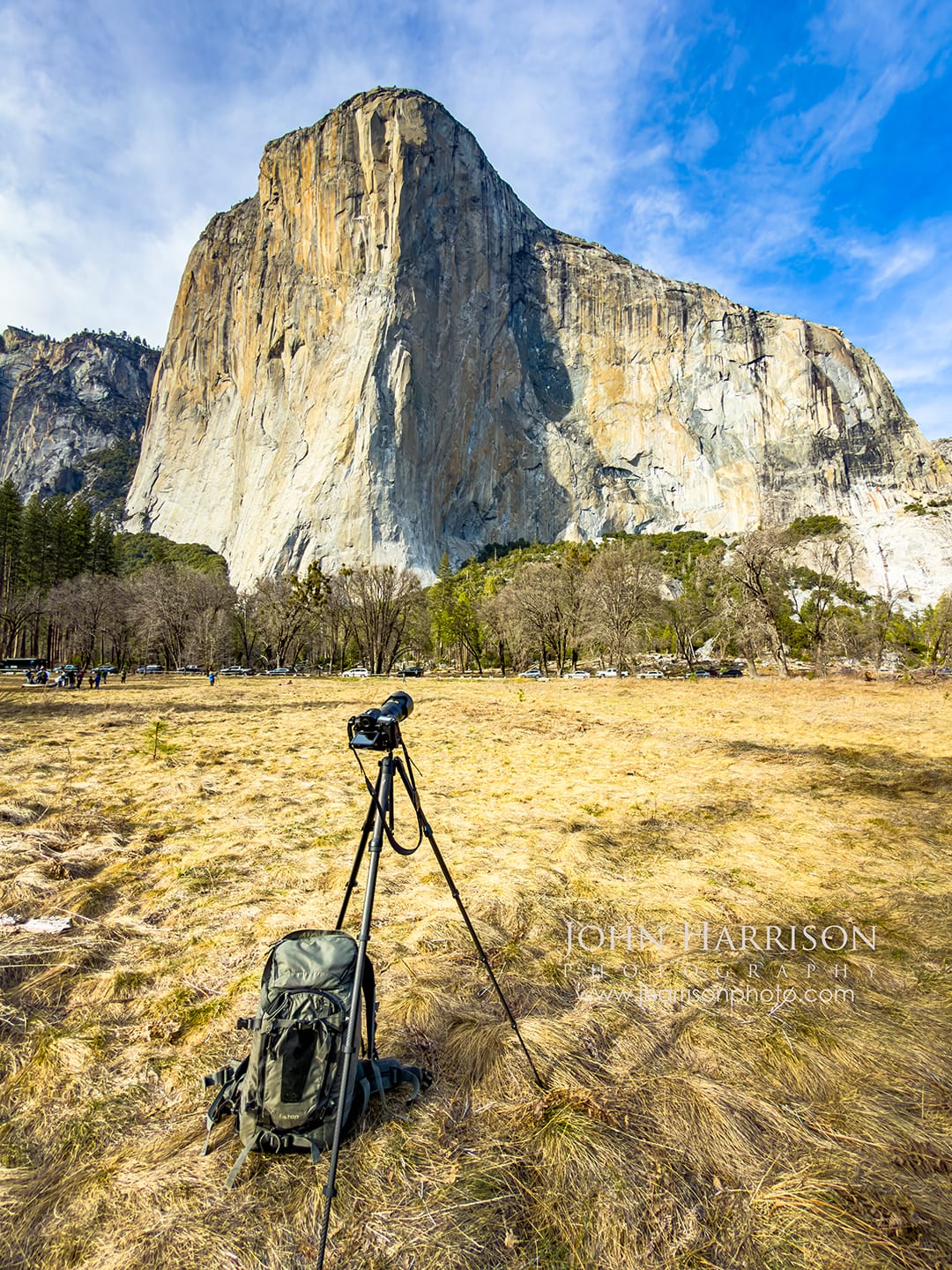
My camera gear setup in El Capitan Meadow with El Capitan towering above Yosemite Valley — one of the most accessible photography locations in Yosemite National Park.
Most of my Yosemite photography is captured using Nikon D850 DSLR (I really love the sensor on this!), my go to lens – Nikon 24-70mm f/2.8 lens, my next most used lens is the Nikon AF-S 70-200mm f/2.8E lens, and my absolute favorite lens is the Nikon AF-S 14-24mm f/2.8G ED wide angle lens. This gear is stabilized with a Gitzo tripod (I have one with super long legs for hills and shoot over fences, and putting it all together in my f-stop Tilopa 50l backpack.
I also have the Peak Design Carbon Fiber Tripod - nice super lightweight tripod that fits in a daypack and suitcase.
Make sure you bring sunscreen and a lightweight water bottle to fill up along the way.
Yosemite Weather in Spring
Spring weather in Yosemite can change quickly. Sunny afternoons in Yosemite Valley often reach 60–70°F, while mornings and evenings can still feel chilly at 30-40°F. Late winter storms occasionally bring fresh snow to the surrounding Sierra Nevada peaks, creating dramatic contrasts between snowy cliffs and flowing waterfalls.
Planning a Yosemite trip? Explore more places to photograph and visit in my Yosemite Valley Travel Guide (coming soon!)
Driving to Yosemite in Spring (Chains & Road Tips)
Spring weather in the Sierra Nevada can change quickly, especially during March and early April. Even when Yosemite Valley feels warm and sunny, storms can still move through the mountains.
Chain requirements in Yosemite officially end after April 1, but that doesn’t mean winter conditions disappear.
If snow begins falling, park rangers may call for chain control sooner rather than later to ensure visitor safety on the roads leading into Yosemite Valley.
And while it may sound surprising, snow can arrive very late in the season.
I’ve personally seen snow in Yosemite Valley on Memorial Day, and chain controls have occasionally been required at higher elevations in the Sierra even during summer storms.
If you're planning a trip, you can always check the latest road and chain control updates directly from the National Park Service here:
https://www.nps.gov/yose/planyourvisit/conditions.htm
Where to Rent or Buy Chains Near Yosemite
If you're driving a rental car or visiting from out of state, chains are easy to find near the park entrances:
• The Stage Stop in Mariposa (Highway 140) rents tire cables for Yosemite visitors
• AutoZone in Oakhurst (Highway 41) sells chains that can be returned if they remain unopened and unused
If possible, consider renting an AWD or 4WD vehicle when traveling in the Sierra Nevada during spring. Conditions can change quickly, especially during passing mountain storms.
Even if the weather looks clear when you enter Yosemite Valley, it’s always wise to be prepared.
How Many Days Do You Need in Yosemite?
One of the questions I hear most often is: “How many days do you need in Yosemite National Park?”
If you’re visiting for the first time, two to three days in Yosemite Valley is ideal.
2–3 Day Yosemite Valley Itinerary Overview
That amount of time allows you to experience many of Yosemite Valley’s most memorable locations:
• Yosemite Falls
• Vernal Fall and the Mist Trail
• Tunnel View
• El Capitan Meadow
• Mirror Lake
• Gates of the Valley
• Fern Spring
• Glacier Point (when the road is open)
Even with just one full day, you can still see several of Yosemite’s most famous viewpoints. But spending multiple days allows you to slow down and experience the quieter moments — sunrise light on granite cliffs, mist drifting through waterfalls, and peaceful walks along the Merced River.
During my most recent spring visit, the valley felt surprisingly calm. With waterfalls roaring from snowmelt and far fewer crowds than summer, March and April may be one of the best times to experience Yosemite.
Plan Your Yosemite Spring Visit
While spring is a magical time to explore, conditions in the Sierra Nevada can change by the hour. To ensure a safe and successful trip, I always recommend checking the following official sources before you hit the road:
- Current Road Conditions: Check for seasonal closures or chain requirements on the NPS Yosemite Current Conditions page.
- Reservations & Entry: Stay updated on the latest entry requirements and peak-hour reservations at the Official Yosemite National Park site.
- Weather Forecast: View the site-specific National Weather Service forecast for Yosemite Valley.
Yosemite in Spring – Frequently Asked Questions
Is spring a good time to visit Yosemite?
Yes. Spring is one of the best times to visit Yosemite National Park. Waterfalls are at their strongest and the valley is often less crowded than summer.
Is March too early to visit Yosemite?
No. Yosemite Valley is usually accessible in March, and waterfalls begin increasing as snow melts. When I was there this past week - it was 50°F to 70°F but chilly late at night and the morning! Bring that puffer jacket and shell just in case. Pay attention to the weather, as you can have snow!
Is April cold in Yosemite?
Daytime temperatures in April typically range from 50°F to 70°F, although mornings and evenings can still be chilly.
What should you wear in Yosemite in spring?
Layered clothing works best. Bring a waterproof jacket, warm layers, hiking boots, and sun protection.
Is there cell service in Yosemite Valley?
Cell service is limited and unreliable in many areas of Yosemite. Visitors should assume limited connectivity and make arrangements ahead of time when meeting up. I sent a text and it didn't send for a few hours. There is WiFi for guests at the various hotels in the valley, but this is slow and shouldn't be relied on.
Is the road to Glacier Point open in March or April?
The short answer is no. Glacier Point Road typically remains closed to vehicle traffic through March and April. The road is not plowed during the winter months, and the National Park Service (NPS) usually begins clearing the snow around April 15. Depending on the winter snowpack, the road generally doesn't open to cars until mid-to-late May, or even June after heavy winters.
About John Harrison
30-Year Yosemite Veteran & Fine Art Photographer
John Harrison is an award-winning fine art photographer who has spent three decades capturing the quiet stories behind Yosemite’s iconic granite. His museum-quality prints are collected by Google, Apple, and REI, bringing the restorative calm of the High Sierra into homes, healthcare spaces, and modern interiors.